What Happened on Wednesday?

Photo by Patricia Luquet on Pexels.com

What happened on Wednesday in Holy Week? Specifically what happened with Jesus on Wednesday? A review of the Gospels does not specifically say nor can any of the activities of Jesus be tied to Wednesday. Matthew 26:2 and Mark 14:1 both indicate that at the end of Tuesday, Jesus states that the Passover will be in two days (Matt. 26:2) and the narrative in Mark states the Feast of Unleavened Bread was in two days. The next part of the narrative happens while Jesus was in Bethany with his friends Lazarus, Martha and Mary in the home of Simon the Leper (Matt. 26:6; Mark 14:3). During the meal a woman presents Jesus with an alabaster jar to anoint his feet, which created quite a stir among the disciples, citing the waste of money that could be used to help the poor. Jesus responds to leave the woman alone because she is doing for him what will not be done to prepare his body for burial (Matt.26:12-13; Mark:14:6-9) and in John’s narrative it is Mary (12:7-8). Soon afterwards Judas Iscariot would finalize his deal to betray Jesus with 30 pieces of silver. This is the only narrative that logically falls on Tuesday night or Wednesday.

There is no teaching, no challenges from the temple authorities, no healings or any of the other many activities that are recorded on Sunday through Tuesday or Thursday through Friday. It seems that Jesus is enjoying a friendly meal with His Twelve and some close friends. It seems that He has no care in the world or concern for what is inevitably about to happen. Instead, He seems to be relishing a good meal in good company. Therein, I believe is a valuable lesson for us all on what appears to be a rather innocuous and ordinary day in the life of Jesus the man. That lesson is to take time out from our busy schedules, our perceived missional work and enjoy the moment that is presented to us. I think the lesson also is reflective of what Jesus practiced regularly, the spiritual discipline of Sabbath rest.

Jesus, part of the God head, knew what lay ahead. He knew the betrayal was in the works, the arrest in the garden would scatter the Twelve, the kangaroo courts all night long would lead Him to a whip lashing, a cross and death. And even if God did not reveal the resurrection to Jesus until the Garden of Gethsemane prayer (which is strictly a speculation of possibilities on my part), He knew that God had an ultimate plan beyond the cross and He trusted His Father with that plan. In that moment it seems that with all that He knew, it was equally, if not more important, to spend some quality time with the people closest to Him in the ministry in a brief moment of pleasant fellowship. The food and the fellowship provided a momentary respite from the wear and tear of ministry. This quiet break from the ministry was probably supplying him with the much needed physical strength He would need to endure the rest of the week ahead.

It teaches me as a minister and leader, that it is important to make room for family and friends and to be fully involved in those moments. It teaches me that when I know I am about to face some ministry challenges or hectic schedules, it is important to take a little time off to gather my strength and thoughts. It teaches me that everyday does not have to be full of ministry activities and that private time with the people I love and with God are as much a spiritual discipline as my prayer, Bible Study and devotional time. It also teaches me not to worry about what comes next, even if God has given me the revelation of what that may be or how difficult the road may be, but to trust God that He has a plan that will work out for my good and His glory. I can imagine that as that dark Friday came to a close, as the Twelve thought about what had transpired, they also had to remember this very precious and intimate moment they shared with Jesus. Except for Judas who clearly regretted his decision, I would like to believe that the rest of them could take comfort in knowing that they had this one last fellowship meal outside the ministry activities to be with their friend, Jesus. And that is a lesson we all can take away from this Wednesday moment, let us frame our lives in such a way that we can reflect with a smile the moments we spend with each other as colleagues, family and friends.

What seems like on an uneventful Wednesday really was a sweet moment for the memory books for those in the room. We really don’t know, because it is not clearly stated but as we go through this Holy Week, let us consider what happened on Wednesday.
Of Logs and Specks (splinters)

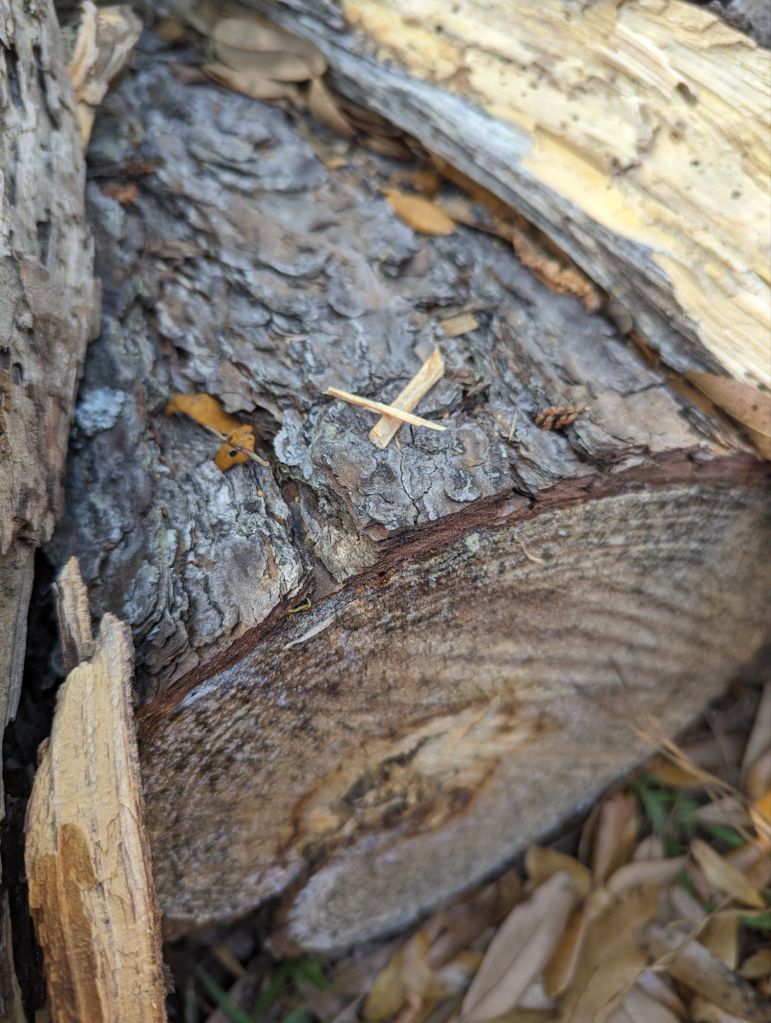
Why do you look at the speck that is in your brother’s eye, but do not notice the log that is in your own eye? Or how can you say to your brother, ‘Let me take the speck out of your eye,’ and behold, the log is in your own eye? You hypocrite, first take the log out of your own eye, and then you will see clearly to take the speck out of your brother’s eye.” Matthew 7:3-5 (NASB)

Sometimes I can get wrapped up pretty tight thinking about what others are doing that I feel like are wrong or offensive to me. It’s not something I am proud to admit, but I have to be honest with myself and with others.

Lately, I have been in a bit of a spiral about how someone I love has been knit-picky, argumentative, forgetful and generally getting under my skin (the world according to me). Thankfully, I have a child who doesn’t mind calling me out respectfully and also is full of wisdom. She reminded me of a few things and perhaps the key thing was that I actually have control of what my reactions can be and that it is important to choose not to get into conversations that I know are going nowhere fast. She also reminded me that some people are not going to change but we can change how we interact with them. Then finally she reminded me that I am also at a point in life where my perspective has changed due to aging and general life living. She did not directly point me to the text above, but when we finished talking, I felt better but I was also reminded that perhaps I have been very busy trying to remove a speck/splinter from someone else’s eyes while I was walking around with a log in my own eyes. It was a humbling but necessary talk and text for me.

We can easily decide what someone else should or should not be doing in their lives. We can make snap decisions about another person based on their appearances and their actions without once taking into consideration the how or why of their life story. Few and far between is the person who does not do this even a little bit. I hear it and see it almost daily. Even though I worked for twenty-five years in the court system and grew to understand that “there but for the grace of God, go I” as I listened to countless stories and cases, I can also fall into the habit of seeing the specks and ignoring the log. I can be prone to correcting people’s words, or expressing what I think people’s motivations are when I really don’t know. My work life experiences has put a level of cynicism in me that I am aware of and constantly trying to overcome, so when I hear it coming from someone else, it can irritate me. I don’t necessarily like to be corrected either. These are little things perhaps, but left uncheck they can quickly spiral into a very judgmental attitude that I recognize is not pleasing to God. He is the one true Judge of all, so my two-cents really don’t mean all that much.

I took a walk after that good conversation and all the above began to filter into my mind. That’s the way the Spirit works, He brings to our memory the commandments we need to successfully live out our faith. As I walked, I began to realize that some of the very things I was complaining about, I was engaging in as well. I had to have my personal confessional moment, get my heart re-set and begin again. I have a different approach right now, that I am praying the Lord will help me to continue with. I am also realizing that now I see I have a log in my own eyes that I am working to get rid of, I am not so inclined to even attempt to handle someone else’s speck. I think Jesus knew that when He gave this teaching. Furthermore, the idea of being a hypocrite is motivation enough for me to be on a continual search for my own logs and to let others handle their specks.

It’s Hard to See the Ground When You Are in the Trench

If you have raced with runners and they have wearied you, how will you compete with horses? And if you trust in a safe land, how will you fare in the thickets of the Jordan? Jer. 12:5 (NRSVue)

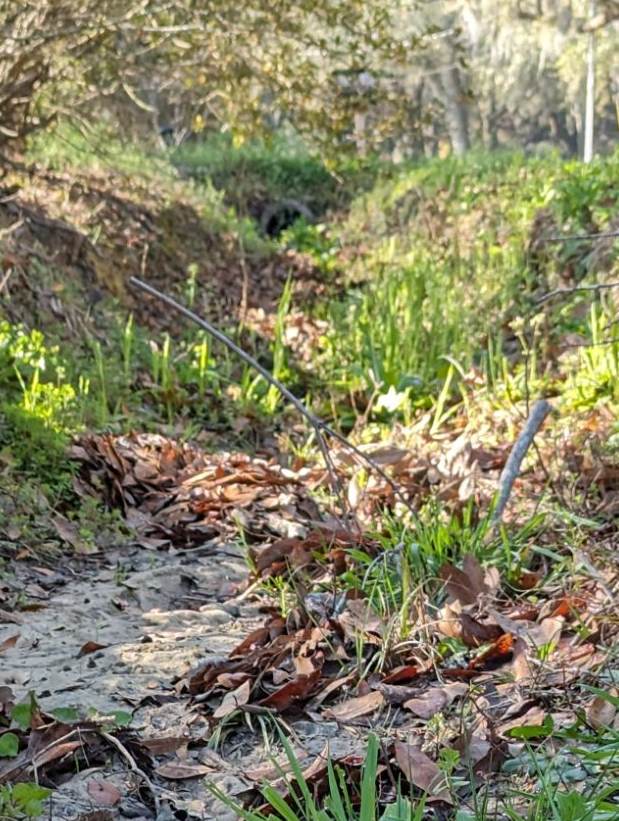
Sometimes, it seems like we work and work, try and try and nothing seems to be getting done, nothing is changing. Whether it’s meeting a goal like saving money or losing weight or even a greater mission like finishing school, completing a major work project to launching a new business or fulfilling a ministry calling, there are and there will be days like this. The excitement and promise of beginning fades away, the daily tasks of just getting it done can begin to overwhelm us and the end seems no where in sight. How easily we can lose track of the proverbial forest when we are daily wandering around the trees.

This was Jeremiah’s complaint. Jeremiah was given the monumental task of prophetic ministry to a stubborn people who refused to believe that God would allow any sort of calamity on their lives, simply because they were God’s Chosen. Chapter 1 of the book opens with the call and the direction of Jeremiah’s life but by the time we get to Chapter 12, Jeremiah’s words have been ignored and his life threatened. Now he turns to God and complains about the apparent unproductivity of the ministry. God in turn responds, to remind Jeremiah that what he has been dealing with is nothing compared to what is to come, but that God is with Jeremiah every step of the way. This would be the first complaint in the book. A second one will be given in Chapter 15 and God reassures Jeremiah once more. The final complaint occurs in Chapter 20 in which Jeremiah basically accuses of God of misleading him in this journey. It is in verse 9 Jeremiah says, “If I say, “I will not mention him or speak any more in his name,” then within me there is something like a burning fire shut up in my bones; I am weary with holding it in, and I cannot.” (NRSVue) Interestingly, God never responds to this last complaint and Jeremiah never complains again even though he would endure even harder persecution and pain in the ministry. Apparently, Jeremiah came to the place of absolute resolve to see the ministry through even when it seemed like he was in a trench and could not see the ground. In fact there would be a time he would be placed in a pit and left for dead, but God rescued him. Everything God told Jeremiah would happen in his lifetime, happened and so at some point it seems Jeremiah saw the proverbial forest instead of the trees.

I think I have been a bit in a trench lately. Personal goals have not been met and the day-to-day demands of ministry take away from what I perceive to be the greater calling and mission God called me to do. I find myself asking the question, “Is this all there is?” I love that God gives me space to ask the question and He gives me room to find the answers, much as He did for Jeremiah. He gives me space when I express my pain and disappointment, then gently reminds me that I’ve come too far with some of my goals to turn around now. He gives me space when I press through commitments and then gives me a fresh idea that further develops the gifts within. He gives me space when I am walking along the road, wallowing in my self-pity and lets a beautiful and rarely seen blue bird fly by. He gives me space when I am in the trenches of life and ministry and lets me look up to see the Spring flowers and breathe the fresh Spring air above me. He gives me space to rediscover Jeremiah and then gives me the courage to write these words of confession. Yes, I have been in a trench and it is hard to see the ground above sometimes, but like Jeremiah, the things of God are like a fire in my bones. If I tried to stop now, I would surely burst open trying to keep my mouth shut and my hands still. And so I find myself committed to the cause and the goals while I sense God above is quietly smiling knowing there is nothing more that needs to be said.

Lord, thank You for Your patience with me. Thank You for always being with me in trenches and above ground. Thank You for loving me so tenderly and sweetly. Please forgive my fits of self-pity and strengthen me for the journey as I learn each day to trust You even more than before. Amen.

Touching the Stones

So Joseph made the Israelites swear saying, “When God comes to you, you shall carry up my bones from here.” Genesis 50:25 (NRSVue)

Photo by Mike Bird on Pexels.com

There I stood in the heat of a hot Texas day, standing on a parched plot of grass, reading the headstones of ancestors I vaguely heard about, often with a tone of scorn. I went looking for my grandparents’ graves and discovered they were in a plot of many others whom had forged a way in the Texas wilderness in the 1800’s and made it their home. Among them were my great grandfather, great grandmother, a great great grandmother along with other relatives. I was told that they were missionaries many of them and indeed, I found stones of those who were either ministers or founding fathers of the local church, the one my grandparents were a part of and the one my own father grew up in but departed as soon as he reached adulthood. Also nestled in a plot in front of my grandparents’ was a small headstone with a lamb on the top. I quickly realized that this was the baby girl I was told was a still birth. The headstone told me something else. She had lived three short days and she had a name. No one mentioned this in my growing up. She was a blip in the family history that was rarely talked about. I confirmed later from my aunt, that she also did not know about the grave until she was an adult. She discovered it while helping my grandmother clean the plot. Even then, some thirty years later, my grandmother was unable to talk about her grief and pain in that moment. Apparently she took it to her own grave, a story untold.

As I stood there, surveying the plot, taking in the history that was before me etched into each one of those headstones, I found a spiritual root I did not know I had been disconnected from. While I heard about these ancestors, they were stories disconnected from my own reality in which church was not the norm and often referred to in only the most negative of terms. I don’t know why that was and the ones who would know are all gone now. So when I embarked on my own spiritual journey, later becoming a minister and pastor in my denomination, I felt like I was the odd one, the one out in left field that no one comprehended or understood. Now I was standing on the holy ground of my ancestors. Their faith seemed to be rising up from the ground to meet me and greet me. I was compelled to touch their stones and receive their blessings towards me. It was a surreal experience, difficult for me to convey, but powerful just the same. While we may have had or have differing theological views, I still knew I was among my people, a people of faith in the same God and Savior. Touching their stones not only was a confirmation and affirmation of my own faith walk, it felt like a transference from generation to generation even though there were a few skips in the generations.

Joseph seemed to know the importance of this transference. In the closing sentences of Genesis, his life was coming to an end. He had been born in the Promised Land, but spent the majority of his life in Egypt. He could foresee the enslavement that would happen to his people but he also saw the day when God would deliver them from that captivity. He insisted, made the people swear to him, that when God would show up and deliver them from Egypt, his bones were to be transferred back to the Promised Land. His faith was firmly rooted in the God of Israel, even though he served well under Egyptian authorities. Joseph inherently knew that there would be a time when generations beyond him would need to touch the stones of his faith and carry it forward. Indeed, Exodus 13:19 details that the bones in his coffin, (the same Hebrew word for the Ark of the Covenant), were taken out in the great Exodus. Joshua 24:32 tells us the mission was completed as Joseph’s bones were buried in Shechem, a parcel of ground purchased by his father Jacob, hundreds of years beforehand. The Israelites now had a tangible memorial they could see and touch to remind them that they were the people of Abraham, Isaac and Jacob, God’s chosen people, living in the Promised Land. While the certainty and accuracy of that tomb is not clear today, there is a place that is designated as Joseph’s tomb that some still make a pilgrimage to, perhaps to reconnect with their faith.

Graveyards are a place where we can reconnect with our loved ones through memories. They hold the history of communities and families. Touching the tombstones gives us a tangible connection with our own past. They can be reminders of the ancestry we come from that helped to form who we are today as we create legacies for the future generations to come. How can one know where they are going, unless they know from where they came? I knew I came from generations of people who courageously stepped out on faith to find a better life in a new country and a new territory. I knew that my ancestors were creative, intellectual and hard-working. I knew that they had a faith in God, but it was when I touched the stones that marked their graves, that I knew my faith did not just appear out of thin air, it was flowing through my veins all along, I just didn’t realize it. By faith, they were praying for another generation to carry their love of God a little farther into the world, and on that hot, dusty day in Texas, their prayers had been answered.

Ash Wednesday and Valentines Day

“For God so loved the world (you and me), that he gave his only Son, that whoever believes in him should not perish but have eternal life.”John 3:16 (emphasis my own)

This year, 2024, Ash Wednesday falls on Valentines Day. The two seem to be exact opposites. Ash Wednesday starts the Lenten season, a time of repentance, fasting, praying, self-denial that is initiated with the ceremony of placing a cross of ashes on the foreheads of believers. Valentines Day is a celebration of love, especially between couples who exchange various tokens of love. Ash Wednesday/Lent focuses on what we may give up or acts of self-denial in order to turn our attention to God. Valentines Day is filled with the expectation of receiving something; a card, a box of chocolates, flowers, etc. Not receiving anything may leave one feeling disappointed or dejected in some way. The two events on the same day just feel like oil and water; they just don’t mix.

But here is a different spin. When we consider that God loved us, you and me individually and collectively, so much that he gave away His only begotten Son to be a sin offering for us, we have to realize that that is love at its finest. It is totally selfless on God’s part and we are the recipients of that selfless love. I am like anyone else. I want to receive nice things or be taken out for a nice dinner on Valentines Day, but Lent and Ash Wednesday, in particular, reminds me that as a Christian, I am called to reflect God’s selfless love for humanity. Practices of self-denial like fasting or giving up a beloved food item are intended to help me focus on how I can repent of my own selfishness and self-centered ways and turn my attention to others who have various unmet needs. This is not to say that I will reject that nice dinner date or token of love. What it does cause me to do is not be disappointed if my Valentines Day does not bring love gifts in any form to me. Because of Ash Wednesday, I view Valentines Day through a different lens, a compassionate one that seeks to love as God loved me.

Dormant, Not Dead

“For this reason I remind you to rekindle the gift of God that is within you through the laying on of my hands, for God did not give us a spirit of cowardice but rather a spirit of power and of love and of self-discipline” 2 Timothy 6-7

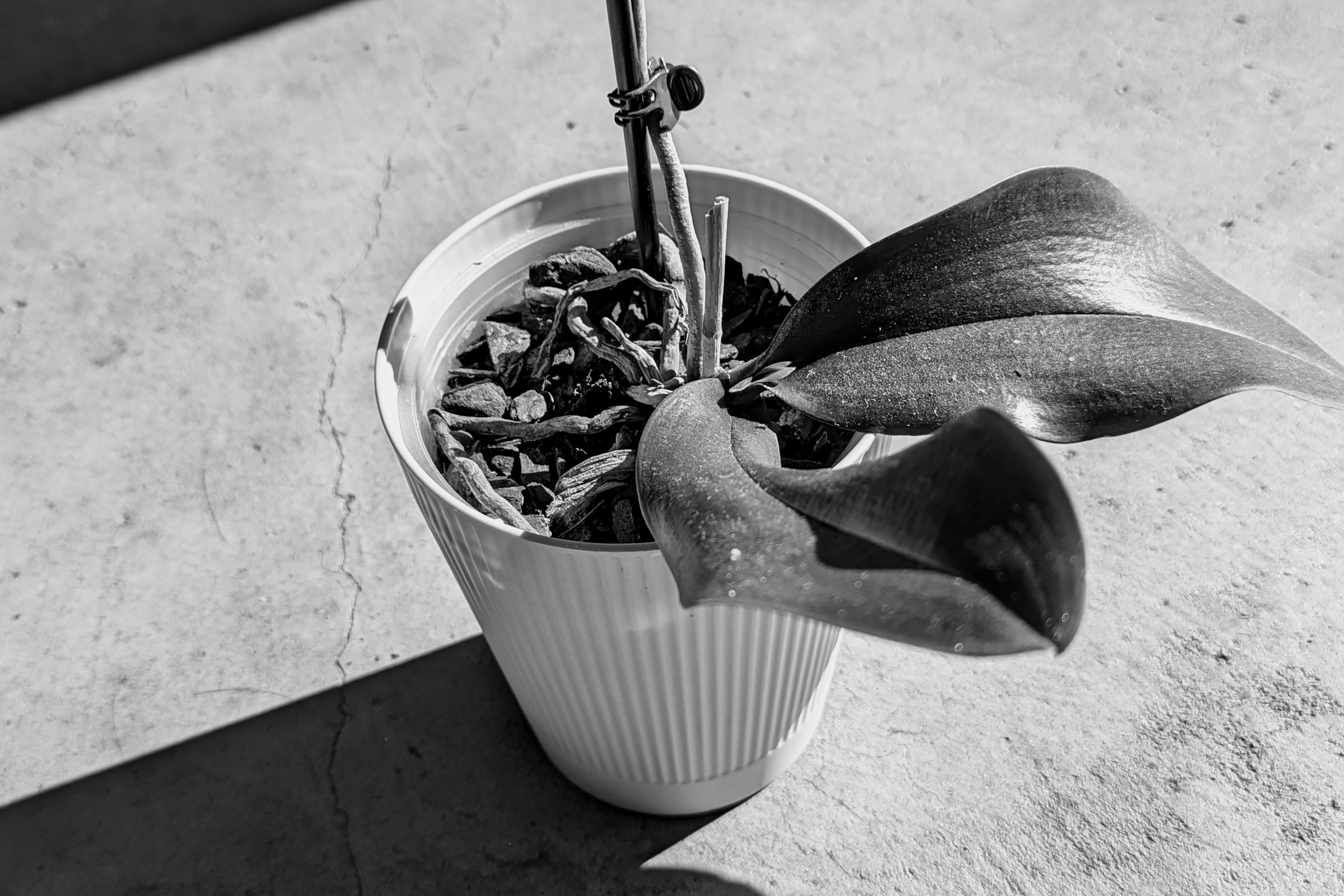
Last year, my daughter gave me a beautiful orchid with cascading purple and white blooms. I carefully followed the watering instructions and it held its blooms for quite a while. Then one day the last bloom fell off the stalk and slowly the stock began to wither and brown. But I kept watering it faithfully because I had researched it and found out that orchids have to go dormant for a while but to keep watering it as prescribed. The other day, I broke off the withered stem and began to notice that at the center of the two leaves were new leaves and that a green root-looking stem had begun to grow longer. I believe it is about to regain itself over the next few weeks or months and I will have fresh blooms. 

Over the past couple of months, I have been regrouping myself. I took careful actions before the New Year to assess my life, my goals, my dreams and my actions. I made decided steps to activate some things that have been lying dormant for some time. I am not sure when or why or how, but over the last ten months, it seems like my life was moving in a direction that I had little control over though I had a strong desire to be doing things like writing here and in other places. I had some relatively minor health issues that slowed me down, but I can’t blame my dormancy on that. I had a milestone birthday (hence the orchid) that quite honestly both excited me and also gave me a serious reality check, but I can’t blame my dormancy on that. I had some rather good times over the last ten months filled with friends and family and laughter, but I can’t blame my dormancy on that either. The desire to create, to write, to be vibrant was within me, but it just seemed like I couldn’t stay focused on anything for very long. It was becoming a bit irritating to me to know that I have so much within me still to do but my mind and sometimes my body just couldn’t get moving to do those things.

Part of my action steps has been to designate regular time in my studio space, “My Create Space”, even if it was just to look at books and articles, to doodle or reorganize my supplies. Today, I opened up this blog website, just to look at it and figure out what I am doing and what my next steps would be. I was rather shocked to see that I had not posted anything for a very long time. In fact, when I reviewed my stats, I realized I have had multiple periods of writing regularly then falling off but this is the longest break. At that precise moment, I was reminded of my dormant orchid and Paul’s word to Timothy above almost simultaneously. The orchid needs periods of rest in order to regenerate and expel the energy it takes to push forth another beautiful stem of cascading flowers. My weekly watering habits were keeping the orchid alive and while the flower stem withered and died, the plant itself is still a lush green with tiny new bright green leaves peeking from the center. 

Creativity is a gift from God that He graced me with. It needs periods of rest for productivity. However, without proper care, rest turns into dormancy and dormancy left unattended can lead to death. Paul gives me and us the prescription for those moments in our lives when it seems nothing is happening, nothing is changing. We cannot rely on others to come along and “water” us. We are encouraged to stir up the gifts within us. For me, it is taking the small steps I have taken, of just showing up on a regular basis in the atmosphere where I am most likely to feel my creative juices flowing. And if the reasoning for my dormancy is based in fear of failure, not being accepted or doubts that this gift is real, then Paul forcefully reminds me that God did not give me that kind of spirit but of power and of love and of self-discipline (sound mind, KJV). 

My dreams, hopes and goals are not dead. They may have been lying dormant for awhile and this is one of my steps to stir myself up again, to “water” myself. I may have been dormant, but not dead. 

The Rose of Sharon

“I AM the rose of Sharon, and the lily of the valleys.” Song of Solomon 2:1

My rose bushes have begun to bloom and for the most part I left them alone this year until I saw these two beauties. They are my first picks for this year. When I gazed upon them I was reminded that I have heard Jesus referred to as the Rose of Sharon, so I was a little surprised when I did a word search I found the only reference to the Rose of Sharon in Song of Solomon. This is a little read and little know book of the Bible and yet it is a beautiful poetic account of love that at times could make the most mature blush so it is sometimes hard to relate the book to Christ. In fact it is more of an analogy of Christ’s love for the Church.

In the text above, the bride is speaking about herself. Her lover responds that she is a lily among thorns. This is Holy Week, and so many of my thoughts are focused on Jesus’ trek to the cross and how Old Testament Scriptures are fulfilled in the activities that lead us to the cross. When I realized that the bride is referring to herself in a very humble way (because the Rose of Sharon may actually be more like a crocus), then my mind went to another text, “Who hath believed our report? and to whom is the arm of the Lord revealed? For he shall grow up before him as a tender plant, and as a root out of dry ground: he hath no form nor comeliness and when we shall see him, there is no beauty that we should desire him.” (Is. 53:1-2). Indeed, Isaiah was prophesying the manner in which Jesus would be brutally handled on His way to the cross. The remainder of the chapter is almost a play by play of the events on that Good Friday. It was God’s plan.

The story doesn’t end there, but that is for another day. The point is that these roses remind me of Jesus and His love for me.

The Chicken or the Egg

“For just as the body without the spirit is dead, so faith without works is also dead.” James 2:26 (NRSVue)

An age old conundrum has been which came first, the chicken or the egg? Recently, as churches begin to re-open their doors and try to figure out how or if to move all that has been learned in the three years of pandemic into our new normal, I find another kind of conundrum. I am hearing congregants question the safety and necessity of having in-person worship experiences and how to hold such services The arguments run the gamut from not feeling comfortable in close proximity to other congregants to those who will come out, complain that the churches will never be the same because we have made worshipping at home too easy and provided an excuse for their fellow congregants to not participate anymore. On the flip side, I hear pastors and ministers complain that managing all the technology has become too dry, they need to have people to preach to or that they can’t get people to come back into the churches but they see their congregants wandering freely in grocery stores and restaurants. After having such a conversation with someone not too long ago, I walked away and asked myself the question, “Are the people crippling the preachers or are the preachers crippling the people?”

My concern is that as a people of God, we may not be exercising enough faith to trust that God is working in all that has transpired. Pandemic made us look at doing church differently, expanding our reach and utilizing other means of communication than face-to-face meetings and in-person worship. For a few progressive churches, the transition was easy as they had already begun to utilize the various technology platforms that have been available for some time. But for many, the transition was bumpy and awkward, but it was done and a whole new world of ministry opened up for many churches. Sadly, there were many churches that failed to make any transition, refusing to practice safety protocols endangering the lives of their congregations or refusing to do anything at all. When the doors were closed, the church was closed also.

In some cases, the failure to transition fell squarely on the congregants who refused to accept that God might be doing a new thing, and in other cases, it was the preachers who refused to accept that God might be doing a new thing and perhaps in some cases, everyone, congregation and leadership just refused. Now that we are coming out of the pandemic, fingers get pointed back and forth using the excuses listed above, stymying the possibilities of growth God has laid before us. Then it occurred to me, pandemic is just the latest excuse we are using for losing the relevancy of the Church. It has been a known problem pre-pandemic that church growth was on the decline. In those years, discussions and conferences were devoted on how to revive the church, how to make it relevant for the present age. Denominations made changes to their practices and their doctrines in the hopes that they would attract more people back into the church. The focus for years has been on how to build up the church and not how to lift up Jesus, who declared, “that if I be lifted up, I’ll draw all men unto me.” (John 12:32).

In fact, it was Jesus who declared the foundation of the church before the church existed (Matt. 16:18) and the entire book of Acts demonstrates that the church was not confined to a building alone. Church happened where ever the Christians exercised their faith; on desert roads, by riversides, in prison cells and in houses. The leaders trusted God to take them to the places that He needed them to be by whatever means He needed to work. The people trusted God to endure hardships and to pray for their leaders and to let the Spirit work in them to spread the Gospel.

Fast forward to today – when congregations can learn to let go of “what it used to be” and have faith that God is doing a new thing and when pastors and leaders can learn to exercise their gifts and resources to do what they have never done before to obtain a new thing, that is the essence of faith with works and works with faith. It may not mean that more people will be in the pews or that more money will come in the collection pans, but it does mean that the relevancy of the Gospel will reach new places and touch new lives and isn’t that really the essence of the Church?

So again I ask, are the people crippling the preachers or are the preachers crippling the people? Which came first, the chicken or the egg?

The Rhythm of Sabbath

“Remember the Sabbath day and keep it holy.  Six days you shall labor and do all your work.  But the seventh day is a Sabbath to the Lord your God; you shall not do any work —” Exodus 20:8a

“The Sabbath was made for humankind and not humankind for the Sabbath, so the Son of Man is lord even of the Sabbath.”  Mark 2:27-28

I have added to my exercise routine a rowing machine.  For the body’s optimal benefit, one must learn a rhythm of pulling and returning in a fluid motion that neither strains the back or the legs.  It is part of a larger workout.  When I am doing my workout, I have been playing a mix playlist of pop, gospel, R&B and jazz music to keep me motivated.  As I am working out, I am listening for that bass beat, that underlying rhythm upon which all the melodies, instrumentals and vocals are built upon.  It is when I am on the rowing machine and listening, I can close my eyes and feel that rhythm of music and the pull/return of the machine and I find myself contemplating on the rhythms of life God has given us.

As a pastor, I have many pastor friends and invariably we have discussions of feeling depleted, tired and worn out.  It comes with the territory.  I find that IF someone has decided to put a day in place for their rest, it is usually after the weekend on Mondays or Tuesdays when their bodies just can’t go any further.  I too have tried that, but earlier this year, I still felt so depleted and I could not figure out why.  I thought maybe it had been the added pressure of doctor appointments and physical therapy.  Then, I received my Bible Study subscription on Resting in the Lord.  As I read the texts about Sabbath and how it was a gift from God and a pattern of work and rest, I began to see the cause of my depletion.  I was never taking a full day of rest from my labors.

I quickly, began to pray and look at my calendar and my activities.  I remembered a time past when I developed a schedule of having all my school work done by Friday night and then doing my best to rest on Saturday’s.  I was still doing work on Saturdays so it was never a complete Sabbath rest.  Sundays are out of the question because I have to preach and care for a congregation.  When I retired from secular work, I thought it would all fall in place, but here I was a couple years into retirement, and still I was depleted.

As I continued with my Study, I felt the Spirit tugging me to examine my weekly routine to determine where I could put the rhythm of Sabbath in place.  Clearly after Sundays was not working.  But how could I manage any other day?  That is when He led me to rearrange my schedule so that the rhythm of Sabbath fell before Sundays.  After all, the Bible does not say only on Sunday or Saturday, but it says six days of labor (whatever that looks like) and one day of rest.  The rhythm became clear to me.  I also realized that for the rhythm to work I had to work on developing a plan that planned for Sabbath, just like I had to learn how to pull/return in rhythm with that rowing machine.  I felt my hand opening up to receive the gift God gave humanity eons ago and for the first time in years, I was experiencing what it truly means to rest from my labor, to rest in His grace.

I am still relatively fresh on this journey, but the benefits have been too fruitful to return to the old way that left me depleted and tired.  The rhythm of Sabbath has now become that irresistible bass beat of life upon which all other melodies, instrumentals and vocals are built upon, that pull/return that allows me to close my eyes and let God lead the way.

Simplicity

“Do not store up for yourselves treasures on earth, where moth and rust consume and where thieves break in and steal, but store up for yourselves treasures in heaven, where neither moth nor rust consumes and where thieves do not break in and steal. For where your treasure is, there your heart will be also.” Matthew 6:19-21 (NRSVue)

Years ago, I was introduced to a book called “The Celebration of Discipline” by Richard Foster.  In my early walk of ministry, it opened a door of understanding of how to live in a manner that would honor God and prepare me also for the work He called me to do.  It was later confirmed while I was attending classes to prepare me for the ministry in my denomination.  The instructor was a retired Marine and a pastor.  For many in the session he taught, it sounded like he was adding a hard task on us as only a Marine could do, but for me it was that bright moment of affirmation and confirmation that the journey I had just embarked on was a real thing that mattered in the progress and growth of a brand new minister.  I was delighted for the instructions.

Spiritual Disciplines or Means of Grace is not a new thing; however, I find that many modern Christians are not instructed well on these things and limit their disciplines to Bible Study, prayer, worship and maybe fasting.  I am drawn to all of these, but I don’t know where I would be without the other disciplines of meditation, solitude, service and so many more.

Spring is trying to peep out its head here in coastal South Carolina and one of the tell-tale signs is the lush blooming of azalea bushes everywhere.  I was walking one morning not too long ago and passed by one such lush plant, but instead of the deep hues of pink, magenta or coral this one was full of pure white blooms and as I gazed upon it, the word simplicity popped into my brain.

Few realize that this is also a spiritual discipline, to eliminate the internal and external distractions of life to put all our focus on God.  This is also Lenten season for me, a time of reflection, prayer, confession and seeking God.  My practices are kept a secret between God and me, but I can say that I have moved beyond giving up sweets and chocolates and calling that a fast.  However, Matthew 6 – 7 are some of my go-to texts in this season.  The Sermon on the Mount is Jesus breaking down how to live a Christian life in the simplest of terms and yet sometimes they are also the most shocking for modern minds to receive.  The text above is part of those teachings that remind us about how we live.  The treasures can be so much more than material things and possessions, but it is the relationships, the positions, the status and approvals we seek from this world.  These treasures can cause us to be entangled in so many things that draw us farther from God.  Jesus is reminding us to examine those things and to put our house and our minds in the correct order.  In other words, remove the distractions and put our focus on God.  This is the heart of what the discipline of simplicity is.

As a woman who is actively involved in family, church and community, my life quickly fills up with distractions, tasks, to-do lists etc.  I believe God put the white azalea bush in my line of vision to remind me that sometimes I need to pare back on things, commitments and most of all myself so that I can see Him more clearly, hear His Spirit more concisely and follow Him more closely.  What better season to start than Spring and Lent together.