As the dew of Hermon, and as the dew that descended upon the mountains of Zion: For there the Lord commanded the blessing, Even life for evermore. Psalm 133:3
We have a hymn we sing in church that is typically sung when we invite people into Christian fellowship. The opening verse says,
I come to the Garden alone,
While the dew is still on the roses;
And the voice I hear, falling on my ear,
The Son of God discloses.
The refrain says,
And He walks with me, and He talks with me,
And He tells me I am His own,
And the joy we share as we tarry there,
None other has ever known.
Words and tune: C. Austin Miles, 1868-1946, Copyright 1912 by Hall-Mack Co., renewed 1940 by the Rodeheaver Co. ( A Div. of WORD, INC.), as printed in the African Methodist Episcopal Hymnal, Hymn #452, Nashville Tn
When we sing this hymn, I can envision being in a peaceful garden alone with Jesus, who is sitting or walking alongside me, listening intently to all my concerns and then providing insight and guidance on how to move forward. It brings to mind that in Christ we have a unique and intimate fellowship in the Spirit that is completely peaceful.
Dew in the Bible is symbolic of both the sustaining power of God in creation and His mercy. The Psalmist draws a comparison of unity among believers as being like dew that is so abundant that it drizzles down the mountain side and produces abundant growth. In Hosea 14:5 God declares in his call for repentance that He will be as dew that causes the redeemed to flourish and grow. The indication in both texts is that fellowship with God produces a life that causes both personal growth and growth in communities.
When I see dew drops on rose petals or feel the dampness on my feet on dew-covered grass, the word refreshing immediately comes to mind. In light of the texts above, it seems to me that as a child of God, a believer, my life should be like a refreshing dew on a dry and thirsty world. My words and actions should produce a thriving atmosphere in which God’s love is self-evident. I recognize that I am unable to do this on my own, but I must have a regular and consistent pattern of fellowship with my Lord and Savior. This happens when I meet Him in prayer, when I meditate on His word, listen for His guiding Spirit and celebrate His awesome power, grace and mercy.
Lord, help me each day to live in a manner that exemplifies refreshing dew in the morning, to speak in a way that will provide abundance to others, to love others where they are just as You have loved me when I was most un-loveable.Please do not fail to meet me in Your garden of prayer so that I may continually have fellowship with You, be guided by Your Holy Spirit and that I may be refreshed as I strive to refresh others. Amen.
“I planted, Apollos watered, but God gave the growth. So then neither the one who plants nor the one who waters is anything, but only God who gives the growth.” 1 Cor. 3:6-7 (CSB)
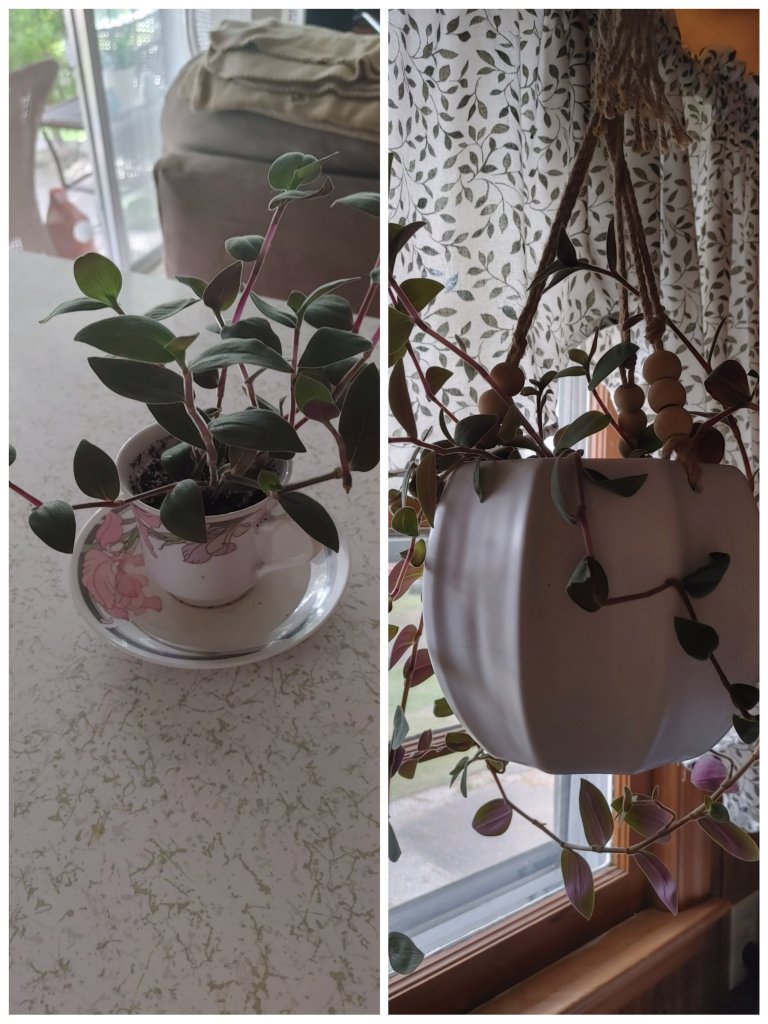
Last year, my husband and I visited a farmer’s market in the next town over. As we walked from booth to booth, we came across a couple who had decided to make planters out of small tea cups and saucers. They planted small starter plants in the cups. It was unique and since I have a thing about tea pots and tea cups, it especially appealed to me. They were not expensive and so we purchased one. Since then, that single sprig turned into a few and eventually I had to repot it into a hanging planter as it was clear that it wanted to be a running vine. When I first put the plant the pot, it seemed too small and I wondered if I had done the right thing. I hung it in a window any way. My reasoning is that it was worth a try and besides I had gotten my money’s worth out of the purchase. I walked through the room the other day and noticed that the too small plant now was popping out on every side and filling the pot quite nicely.
It seems to be our propensity to take credit for things when they are going well. This is especially true in ministry. I have been in services where a minister wants to claim the credit for an initiative or a believer’s growth that I actually started or was instrumental in their development. I’ve developed a sense of humor in these moments. I wasn’t always that way. There was a time when my own sense of self-worth was wrapped up in the success or opinions of others. No one wants anyone to steal their thunder or take undue credit, myself included. However, I’ve adopted an attitude that recognizes someone who feels the need to do this has more insecurities than I do (and I once was that person) and that it really doesn’t matter because I know that God keeps a strict accounting of all my words and actions. He already knows who deserves the credit. And guess what? It’s not me or the other person; it’s God!
This is what my little plant taught me as I gazed upon it. The people I bought it from can take credit for having the idea to plant the sprig in a tea cup. My husband can take credit for putting the money on the table and giving the little plant a chance to live. I can take credit for setting the plant in good light, making sure it was watered, re-potted and pruned. Ultimately, the little plant is one of God’s creations. He could have sent bugs to destroy it. He could have let the roots rot or because it sat too close to the window the cold to hinder it’s growth. Instead, He sent the sunshine, gave me a sense of how to care for it, gave a heart for my husband to purchase it as a gesture of love and planted an idea in the heads of two people to try something as a means of making money for their household.
This is the heart of Paul’s lesson to the Corinthian church. Stop worrying about who gets credit for someone’s salvation. It really doesn’t matter. Stop striving for credit because of a great project that has grown the ministry. It really doesn’t matter. When we stop trying to steal God’s credit, we will be able to not be upset when someone else tries to steal our credit. It was never ours to begin with.
“The wilderness and the dry land will be glad, the desert will rejoice and blossom like a wildflower.” Is. 35:1 (CSB)
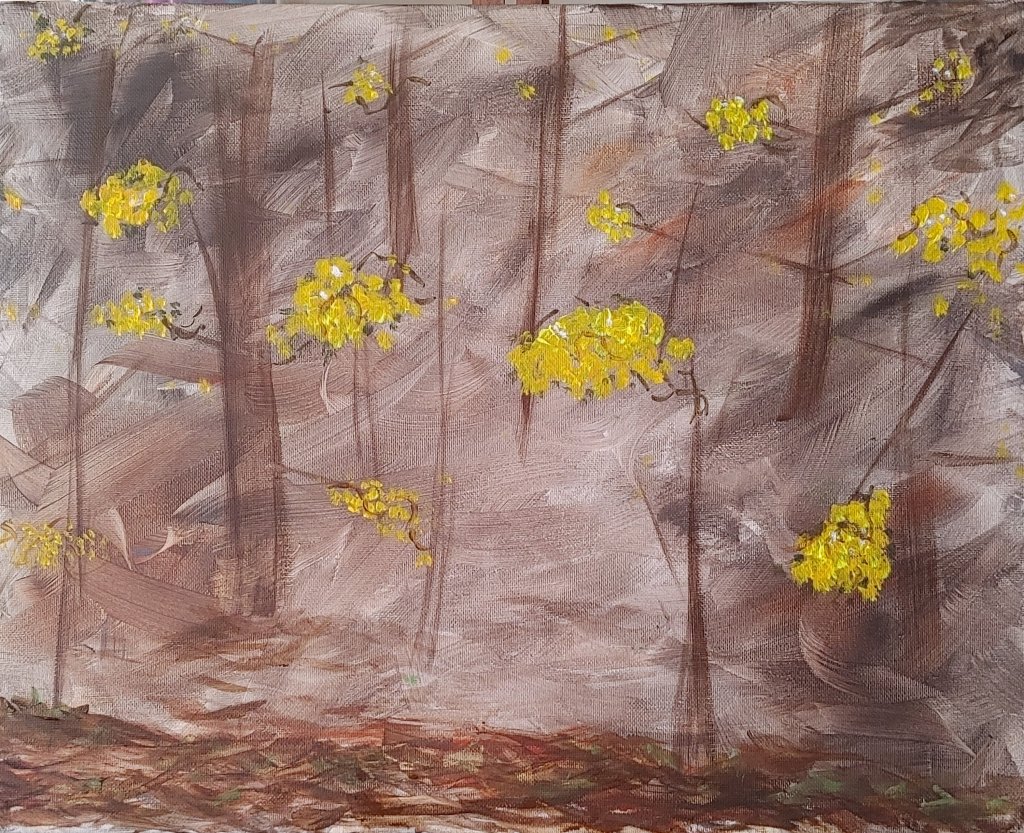
The calendar says that Spring should be in full blossom where I live. Indeed, it is trying hard. We have some of the lushest and most colorful seasons I have ever seen. There is a progression of flowering trees and bushes that usher in the season. By the time, we reach mid-April, shades of pink, red, yellow, peach, green and lavender will have burst forth, sometimes all at once and in the same space. I look forward to this season every year, but not in March or April as many do. No, I am hinging my expectations on the indigenous yellow jasmine. They are usually the first blooms but sometimes they come with the flowering pear trees. What I love about the jasmine is how they seem to miraculously appear out of the dead, dry brush of winter barrenness. Each year, in late February, I begin looking for their first peeping through the roadside woods. I might see a bloom here or there and then one day, there will be a whole vine draped across an apparently dead branch, dressing the woods as though it were the belle of the ball. It is my annual reminder that God is not through with us yet. He is allowing us to see another season, giving us another season of renewal and hope.
The book of Isaiah, is one of the richest prophecies that point to Israel’s demise during his time, but also to Jesus Christ and ultimately to the New Jerusalem of Christ’s return. These prophecies are woven through the historical narrative that he gives and the judgments God pronounces to the unfaithful. Isaiah 35 is one of those small chapters that is wedged between judgment and historical narrative. It depicts a time yet to come that would give Israel the hope of a new season that they would need to persevere their immediate circumstances. The entire chapter ignites my imagination to see a future time in which everything will be beautiful, lush, bright and good. The first verse brings to mind the feeling I have when I see those first blooms of yellow jasmine in a dreary, gray winter woods.
The last few years, have been challenging. Even though, the seasons have changed physically, we have been in an extended winter so to speak. We are still fighting an incurable virus that has claimed too many lives. Injustices continue to roll. There is hate speech on almost every level of society. Now, currently we are watching a war unfold on the Ukrainian soil and there is much uncertainty for all of us. I believe whole-heartedly that God has all things in His hands. I also read and understand His word to know that there will be a time when time and life as we know it will be wrapped up. I believe by my confession of faith, that God has a place for me in His eternal kingdom. Still, day to day life can make it tough to remember this sometimes. This is why I am grateful for yellow jasmine in dreary woods to remind me that my hope is built on God’s promises and this is why I am grateful for Isaiah 35 which reminds me and all who believe, that God has an end plan we can all hope in. Indeed, part of this prophecy has been fulfilled in Jesus Christ. Because of that, I know I can trust that there is an eternal hope. Spring, yellow jasmine and the changing seasons are the way that God reminds us to hold on and wait patiently for Him to make all things new again.
“Do your work for six days and rest on the seventh day…” “Bring the best of the first fruits…”Ex. 23:12a; 19a
As I write this, we are deep in the heart of Lenten season. It is a time for reflection, repentance, meditation, self-examination and self-denial. I do not take the typical stance of giving up a particular food item to tell everyone that is what I am denying myself of during this season. In fact, I rarely have a very defined fast, but I do take this season to spend more time with God through reading my Bible, prayer, journaling and listening carefully for the Spirit to speak. I may add an additional devotional practice with a very targeted text or focus. This year, I have also been considering what Sabbath really means. Do I truly practice Sabbath? Is there a set day for Sabbath? How do I honor God, bring my first fruits to Him in this season? It has also coincided with a Bible Study in Exodus that I am leading for the church.
We have had some very lively discussions centered around Sabbath. Simply put, Sabbath means rest, ceasing from labor. It’s nuances are that it is not just a matter of ceasing activity and doing nothing, but it is a set apart time to cease striving and direct our attention towards God. During our Bible Study, it invariably comes up, that Sunday is Sabbath for Christians. However, as we studied, the class quickly realized God never said a specific day, just six days and on the seventh rest. What we concluded was that God seems to be more interested in a pattern of work and rest that all too often we neglect, abandon or fill with so much religious activity that it is anything but rest. The other item we discovered, is that in our Sabbath and worship, God requires we bring him the first and best of our increase as a sacrifice. Of course, we are New Testament Christians, so for us this does not mean rams and goats but it is our tithes, time and talent. It is our praises and worship that should be our very best for Him.
The topic of Sabbath is challenging for me as a pastor and leader. While the expected norm is that Sunday is our Sabbath day, our day of worship, for me and for every pastor or leader I know in the church, we are working on Sunday. We are leading the worship, preaching, teaching, ministering to others and at the end of morning services, sometimes we have to go out for visits, or at least make a round of phone calls to follow up with our congregations. Our roles require our availability to the congregation in their times of need. We also have the task of meetings, administration, vision casting and depending on our denomination, answering to higher levels of ministry. Tucked between all that, is the weekly obligation to prepare for the next week’s Sunday services and message, family obligations and for many a secondary vocation. It’s a lot! On a mental level, I understand the command for Sabbath. On a practical level, it’s often easier said than done. Does our Sabbath naturally fall on another day? Do we carve out the time? Do we truly practice Sabbath?
Not long ago, I had the opportunity to go to an art supply store (what my husband calls my toy shop). I went in looking for some specific items, but as I walked the aisles, I began to see a painting unfold in my mind. It was in a medium that I don’t normally work with and the idea was not a depiction of something I have already seen. I started to ignore what I was seeing in my mind’s eye, but I couldn’t resist it. By the time I left the store, I had a new canvas, some paint and brushes and an inspiration. I had no idea when or how I would complete this painting. The following Sunday, I preached my sermon, came home, ate my dinner and was drawn to my studio, where I pulled out my new canvas, paints and brushes and set up my easel. I just began to let the brush and the paints flow. I did not try to imitate what I thought I saw in the art supply store. I just let things flow, I played with the colors and the brush strokes, stepping back to let the paint dry and to determine the next move. I was finished in a period of time that seemed entirely too short but I was satisfied and I felt like I had just done something that worshipped God with a gift He gave me to use for His glory.
It probably will never land in anyone’s museum or vast collection. I will hang it on the wall in my office or my home and when I look at it, I will have the satisfaction of knowing that on a Sunday afternoon, I experienced Sabbath in a new and fresh way, a way that had no striving, no purpose for self-promotion but only to honor my Creator and what He created in me to do and be. Going forward, I am not seeking to have a Sabbath experience just like this one. Going forward, I am willing to develop a pattern of Sabbath that worships God with my substance, to be open to His leading and creativity and to move in His Spirit with a flow and ease like I did on that Sunday afternoon.
Several years ago, vertigo raised its ugly head with me while I was teaching a youth Church School lesson. The trip to the hospital and subsequent treatment and therapy took a full four months before I was cleared of this issue. To this day, I must be mindful of the trivial things that can provoke it like being tilted backwards too long in a dentist’s chair, sudden head movements and be ready to do the basic therapeutic exercises to realign my sight and balance when it tries to show up in even the slightest of ways. Lately, I have been experiencing some sort of ear problem that has not been like vertigo exactly, but it has created the imbalances and sense of echo in my hearing that has made me to pause and examine what is going on, slow down and take care of myself.
For those unaware of what vertigo is, it is an inner ear syndrome in which the nerve endings that control balance fall off their nerve strands and collect in a corner of the inner ear. The nerve endings are so small they are not detectable by any means of Xray, ultrasound or MRI. The treatment is typically doing exercises that tilt the head and basically sweep the nerve debris away to regain one’s balance. When I was diagnosed with vertigo and going through treatment and therapy, I was drawn to 1 Corinthians 12: 16-26 and Paul’s discussion of how the less glamorous parts of the body are given more honor in God’s sight to maintain the health and well-being of the body. The discussion is an analogy of how God fits spiritual gifts together in the church. The realization that nerve cells in my ear could disrupt my entire sense of balance brought into a heightened focus the importance of honoring and encouraging all Christians to seek and serve in their unique spiritual gift set. Spiritual gifts always interested me, and I believed whole heartedly in the concept of all members being attuned to their gifts, but in this particular moment in time, as a somewhat green pastor, I gained an even clearer sense of the importance of spiritual gifts and appreciation for all members of a church no matter what they were doing or not doing in the church.
Fast forward to the past few weeks, while I know that the current issue is not vertigo, it is disrupting my life to a degree, and I am reminded of the same scriptural passage with another layer of importance. This time, in addition to seeing it as an analogy of engaging all church members with their various gifts and talents, I see it in the broader picture of social justice and disparities. When we overlook the “least of these,” do not stand up for what is right or leave it in the hands of others to make changes, we are allowing the debris of these issues to pile up in a corner of our society and over time there will be an imbalance that disrupts everyone’s life. Vertigo.
In Paul’s analogy discussion of the body, he points out that no one part of the body is more important than the other. This is God’s intention so that when one part of the body falls short of its duty, other parts of the body will compensate. We see this at work in many of our other-abled friends and family. The blind have a more acute sense of hearing or smell. The deaf have a keen ability to read lips. Amputees often find that other limbs and body parts learn to accommodate what is lost, etc. Take a moment and marvel at God’s construction of your own body. The skin is a collection of cells that protect the inner organs from excessive heat and cold. The fingers only move by a collection of moving parts that includes nerves, blood, tendons, ligaments, muscles, and bones. The heart cannot send blood to the other organs without a fresh supply of oxygen from the lungs. Nothing can remind us more of the miracle of God’s creation in humanity than holding a newborn baby or watching the last breath leave someone’s body. And if just one small thing disrupts the mechanism of our physical bodies, we rapidly discover the impact on the whole body.
Paul’s point is that if God created humanity this way, He also created the Church this way. The pastor alone cannot cause the church to grow or disintegrate. Church leaders singularly cannot cause the church to grow or fall apart. One disgruntled member cannot unite or destroy a church alone. It is the regard or disregard for each other, the affirmation or discrediting of each other’s abilities and gifts, the ability to work cohesively or not that will drive the future of any given church. Pandemic has sent many reeling as though we are suffering from a bout of vertigo and pandemic has also created an opportunity for all of us to explore and better exercise our giftedness. In churches where the pastor, leadership and members honor, respect and encourage each other there has been significant growth. It may not have come with increased church roles, but it came with increased outreach, broader platforms to convey the Gospel and more appreciation for the how God has gifted a congregation with prayer warriors, media artists, carpenters and craftspeople who have been beautifying the church plant while we were virtually worshipping, and so many other possible gifts that may not have been revealed if we were not all thrown into the reality of pandemic. However, in churches that were lopsided in leadership, failing to honor one another and spiritually weak, pandemic has rendered them paralyzed, wobbling from the dizziness of vertigo, and wondering how they will make the next budget or if they will be able to re-open their doors. Vertigo is not a terminal illness; it is a symptom of imbalance that can be corrected with discipline and rehabilitation. My own vertigo experience taught me that there was an imbalance in my body and in my life, but it was correctible, and I did the challenging work to get back on solid footing and churches that find themselves in vertigo can do the same thing.
I spent hours between therapy sessions, reading and meditating on the Word. I talked with God, I examined my life and made decisions to strip away the things that were creating an imbalanced life. I had to learn all over again how to physically walk with balance and I had to learn to recognize the cues when the debris in my ears was building up so as to take the necessary steps to sweep it out. I also learned valuable life lessons for ministry that I was able to bring forward to the next charges I was assigned to serve. I have learned to recognize that vertigo can come back, but I have the tools to combat and overcome it. So here I am in present day, not with vertigo but a diagnosed ear infection that is creating an echo in my hearing and a slight imbalance to my walk. Somehow, I missed the subtle cues that the infection was building and now I am dealing with a much more stubborn infection than I have had in the past. It is in this moment that I began to see vertigo and imbalance as an analogy of our societal injustices and disparities.
It seems like to me that our nation is reeling with a proverbial case of vertigo. It is a symptom, not a terminal illness. The underlying cause is a buildup of social debris that has been compiling for centuries. The source of this debris is not nerve cells but racial, gender, economic and political inequalities. The rapid pace of nightly news segments of an out-of-control virus, police brutality, insurrection and domestic terrorism, horrors on the borders, legislative gridlock, mass shootings, gang violence, racial slurs, sexual abuse, gender bias issues and so much more has a nation reeling in a dizzying circle. Compounding our issues are the natural disasters and environmental concerns that is thrusting us farther apart, pointing fingers at one another, instead of trying to help steady one another. Motion sickness medications will help the physical symptoms of vertigo, but it does not cure it or take away the nerve debris in the ears. Likewise, platitudes and good rhetoric may ease the effect of our collective vertigo, but the real work comes in the therapeutic work that needs to happen.
As Christians, it is our responsibility to lean in on the Word of God, find the prescriptions and exercises we need to do the ‘physical therapy’ necessary to clean up our debris. One might say the problems are too big and too much to resolve. That is true for one person, but it was God who took twelve ragamuffin men and turned them into world changers, who saw something in a woman with too many husbands and made her an evangelist, who looked upon a man who described himself as the least of the least and defeated the Midian army with three hundred men. When I read the Bible, I find repeatedly, that God favors the little person who has faith to believe that God can do all things. What would happen if ALL Christians actually began the hard work of loving our neighbors, of confessing our sins, praying, and intervening on behalf of those who are unable or unwilling to change their ways. If we truly were to begin to live out the commands of God, we will find ourselves standing for justice and fair treatment for all, we will begin the stewardship of caring for the planet as God ordained man to do and we just might start to treat people with more kindness. It is a tall order and I find myself challenged as well. What can I do? Where do I need to change my habits, language, and thoughts? Where can I put my faith to action? I believe that God can take my one something and add it to another person’s one something and if ALL Christians committed to just one something they can do, we may begin to clear out the debris and begin the process of righting the wrongs and relearn how to walk in balance with God. Make no mistake, the work of ‘physical therapy’ can be tedious, painful, and tiring but it is necessary if we expect to see a healthy, well society. Is it impossible? According to God’s word, nothing is impossible with God.
“Truly I tell you, unless a grain of wheat falls to the ground and dies, it remains by itself. But if it dies, it produces much fruit.” John 12:24 (CSB)
It’s winter now in SC which to some it may not seem much like winter at all. Admittedly, there are subtle nuances one has to look for closely to truly appreciate this season. The most notable is that everything turns brown and looks rather lifeless. There are exceptions, live oak trees, pine trees and some of the succulents that grow so easily in this coastal soil. It will be several weeks before we will see the first peeks of spring starting with the yellow jasmine that will wind its way through the gray forests. We rarely see snow or ice or hard freezes yet, nature finds a way to rest itself and many things that look like they are dead and hopeless will spring back to life soon.
I came upon this yucca plant the other day. It was a cold winter morning, the sky was gray and even though its leaves were bright green against the dull brown ground, I noticed that there were these dried fruits that looked like seed pods and it reminded me of what Jesus said about Himself in the Gospel of John. He was predicting His own death. Those who loved Him didn’t want to hear anything about death, but He told them the parable above. What He understood and was trying to get the Disciples to understand is that it was necessary for Him to die so that the seed of salvation could be planted for the whole world. They didn’t understand it at the time, but later it probably became more clear to them. It was his sacrificial death that would usher in a new era in which anyone who believed that He did die for our sins, would receive new life and the promise of an eternal hope in heaven.
The past two winters have been tough with so much sickness and deaths all around us. This winter is already shaping up to be more of the same. It can be hard to see the good in this season, but what Jesus says is true. New growth happens because a plant has produced seeds that fall to the ground. For that to happen it must bloom, develop its unique seed whether by blooms or fruits, and then die so that the seed can fall to the ground. A gardener understands that unless you pluck the dead blooms off the bush, it will not thrive. There have been times in my life that almost as soon as one family member dies, another announces that they are about to have a baby. This is the cycle of life that God created.
Winters can be unpredictable. We never know exactly how long they will last or how harsh they will be, but they are just a season that we go through. Winters help us appreciate the beauty of Spring and bring the anticipation of the remainder of seasons in the year. Life moves through seasons as well. I don’t know how long this season of virus and death will last, but the yucca plant reminded me that after this, there is a promise for new growth, new life and gave me hope for the next season to follow. In am resolved to wait patiently on God and the next season that will come, a season of fruitfulness and growth.
Then Elisha prayed, “Lord, please open his eyes and let him see.” So the Lord opened the servant’s eyes, and he saw that the mountain was covered with horses and chariots of fire all around Elisha. 2 Kings 6:17 (CSB)
I am a person with multiple vision issues. I am near-sighted but at my age I also need reading prescriptions. I have astigmatism and one of my eyes tends to be a little lazy, meaning that it doesn’t always look straight at objects. I noticed from a young age that when I focus on something intently, and just blink, when I focus in again, I am seeing that object from a different perspective. As I developed a love for creating art, one of the foundational lessons is on perspective drawing, which is how to align objects so that the sense of depth is accurate to the overall piece. I also enjoy walking through my neighborhood for exercise and meditation. I have a general route I will walk for the purpose of maximizing mileage, but in that route I will mix it up just so that I don’t get bored. This also allows me to see things differently or to notice the nuances of nature I might not notice if I stick to one route, one direction always. As I age, I recognize that it is easy to see or do things in only a set pattern and to become rigid to change. And so when I walk, to keep me from looking at the neighborhood the same way, I just take some time to look up to get a fresh perspective on my surroundings.
We have been living in a time where change is constant and for many it is overwhelming. It is hard to wrap our head around what routines and habits we may return to after this pandemic or if we will ever return to the comfort zones of our routines. With so much turmoil in this world we can feel like Elisha’s servant. The full story is that an army was filling a valley below where Elisha and his servant stood. They were intent on finding Elisha and putting an end to his life. Early in the morning the servant woke up and saw the massive army below, stirred Elisha and asked him what they were going to do. The prophet already saw that God had put an even larger army of angels around the valley to protect him and his servant. This is when Elisha prayed to God to open the eyes of his servant so that he could see, there was nothing to fear or be worried about. The account ends by telling us that by prayer the Aramean army was struck with a blindness and allowed Elisha to lead them away to be delivered to the Samarian king as captives and then told the king not to kill the army but to feed them. His actions and his instructions went against the grain of the culture and it demonstrated God’s power and His grace.
I think the lesson we can take away from this is two-fold. First, in those moments of feeling overwhelmed, afraid, anxious, doubting or unsure we need to pause and pray to God to give us a different perspective, a different way of looking at the situation. Second, many times what seems like certain disaster and destruction is only an opportunity for God to demonstrate His power, grace and mercy and to remind us that God’s ways are not ours and His thoughts are not like ours (Is. 55:8).
Feelings of being overwhelmed, anxiousness, doubts and fears are real. I don’t experience them the way I once did, but I still experience them from time to time. This is one of the reasons that I make sure that I maintain a healthy lifestyle and take time for reflection, meditation and prayer. I remind myself in these moments to step back from my emotions and to take a look up or a look around, just to give myself a different perspective. It is what helps me to keep my sanity in what seems to be an increasingly insane world. It helps me to stay grounded and focused, remembering that through it all God is still in charge. If you are experiencing these things, I encourage you to find a way to take a minute to look at things from a different perspective and see if this doesn’t help.
Lately, on my morning walks I’ve been adding a few extra steps by walking a little farther down each end of the street that I walk. These few steps amounted to an overall increase to my walk by about 5/10 of a mile. It may not seem like much but there is definitely a sense of reward in this because I like seeing and hearing the results on my fitness tracker. Every time I pass a mile, the fitness tracker speaks to me and lets me know I completed another mile. I see the result when I realize that I am reaching that mile marker a little sooner on my walk than I had before. I never would have dreamed that a few extra steps would add up like this and it got me thinking.
What if we take a few extra steps with God? The best reason I can think of is that James 4:8 promises when we draw near to God, He will draw near to us. Considering all the uncertainty that we are living in currently, I can use all the comfort and closeness to my Father who promises to care for me (1 Pet. 5:7). How do we take these extra steps? Take a few minutes each day to read His Word that provides us with all the instruction, direction, correction and assurance we need (2 Timothy 3:16-17). Reading is not enough, we need to take a few minutes to meditate on the meaning and the impact of His words on our day-to-day activities (Joshua 1:8). Finally take some time to talk with God and listen for His answer in prayer. We don’t have to be fancy or long winded, but be direct and have an open mind for His response. The answer of an all-wise, all-knowing God provides peace and understanding that nobody on earth can provide (Philippians 4:7).
Each time I walk now, I am looking for a way to take a few extra steps. I am also challenging myself to spend a few more minutes each day with God. What about you? Will you challenge yourself to extend in areas where you want to see progress? More importantly will you challenge yourself to draw nearer to God? The rewards are immeasurable.
“…your servant will go fight this Philistine!” 1 Sam.17:31b
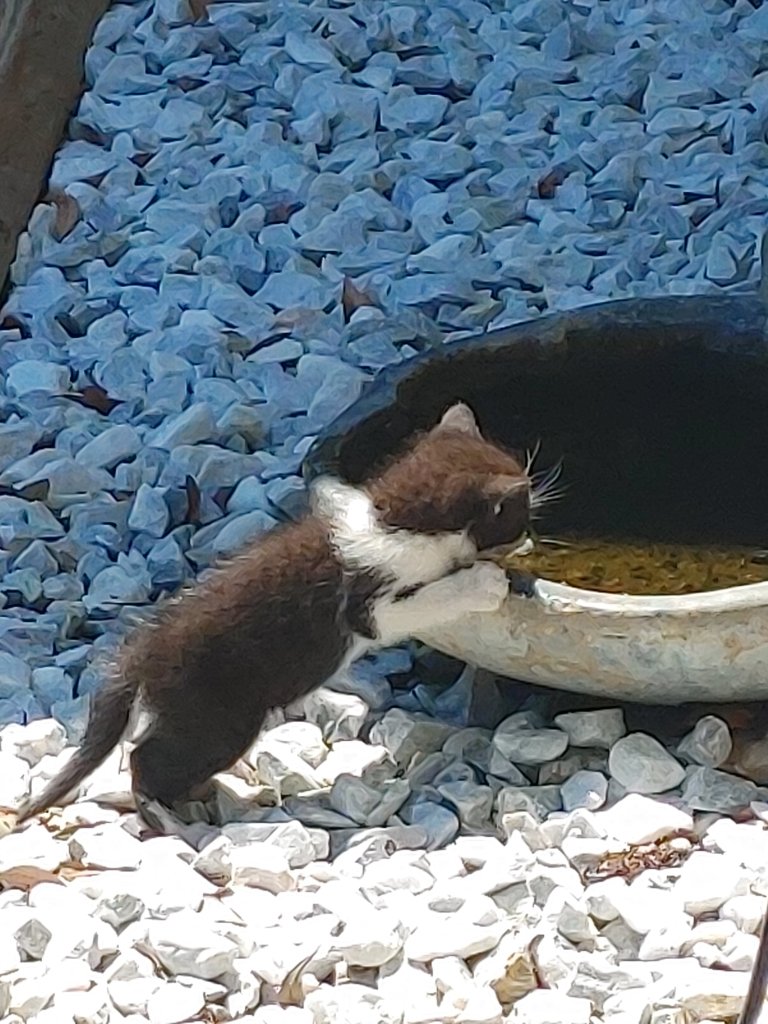
One morning when I came back from my morning walk, I turned the corner to see this little kitten stepping up to a large water bowl we keep in the back yard. He looked like it took all his strength and courage to come out of his hiding place, cross the yard and then step up to get a drink of water. I don’t know if it was his first time or not, but he was alone and the image of this tiny kitten at the big bowl reminded me of what courage looks like. We know what we need to do, yet the task may seem too great for our abilities or we are surrounded by naysayers that don’t mind telling us what we cannot do.
This was David’s story. The youngest of eight boys, David was given the task of tending sheep. When the time to anoint a new king came, His own father did not include him in the line-up until it was plain that none of his seven other sons met God’s criteria. David was an afterthought. But David didn’t let this hold him down. In fact, he used his time wisely in the pasture, learning what it meant to lead, to fight and to build his relationship with God. When Jesse, his daddy, sent him to check on three of his brothers that were in battle, he was met with jealousy, disdain and mockery. Goliath, the Philistine giant, was terrorizing the army. David witnessed what was going on, inquired about what was going to be done and was brought before the king. He told King Saul, not to worry, that he would kill the giant. Saul also discouraged him, stating that David was too young (too small) and inexperienced to go to battle against a seasoned warrior like Goliath. David knew what God had put in Him and knew that God would help him fight this battle. And while Saul consented, it was clear he did not have faith in David’s courage as he tried to dress David with his own battle gear. David gave it a try and quickly realized that he could not fight the battle in someone else’s equipment. Instead, he went armed with what he knew – a slingshot, some smooth stones and the power of prayer. It must have looked ridiculous to watch a young, unarmed boy with a slingshot challenge a seasoned man of war in full battle regalia. Even Goliath made fun of him. What Goliath didn’t bank on was the courage God had put in David’s heart and the fact that David would call on the name of the Lord to do the work. All David had to do was fire the stone from his slingshot, God handled where it landed and caused David to get the victory. The very thing Goliath threatened to do to David, David did to Goliath.
Courage is more than strength or ability. Courage is not foolish ambition or swagger. Courage does come from within. It is looking at something that seems impossible or insurmountable and having the faith and confidence in God to know that what you need to face the battle is already inside you. Courage understands that you do not need to be like others, do like others and certainly not believe the negative talk others speak over your life. For me, courage looks like the little kitten that stepped up to the big bowl of water.
“For now we see only a reflection as in a mirror, but then face to face. No I know in part, but then I will know fully as I am fully known.” 1 Cor. 13:12
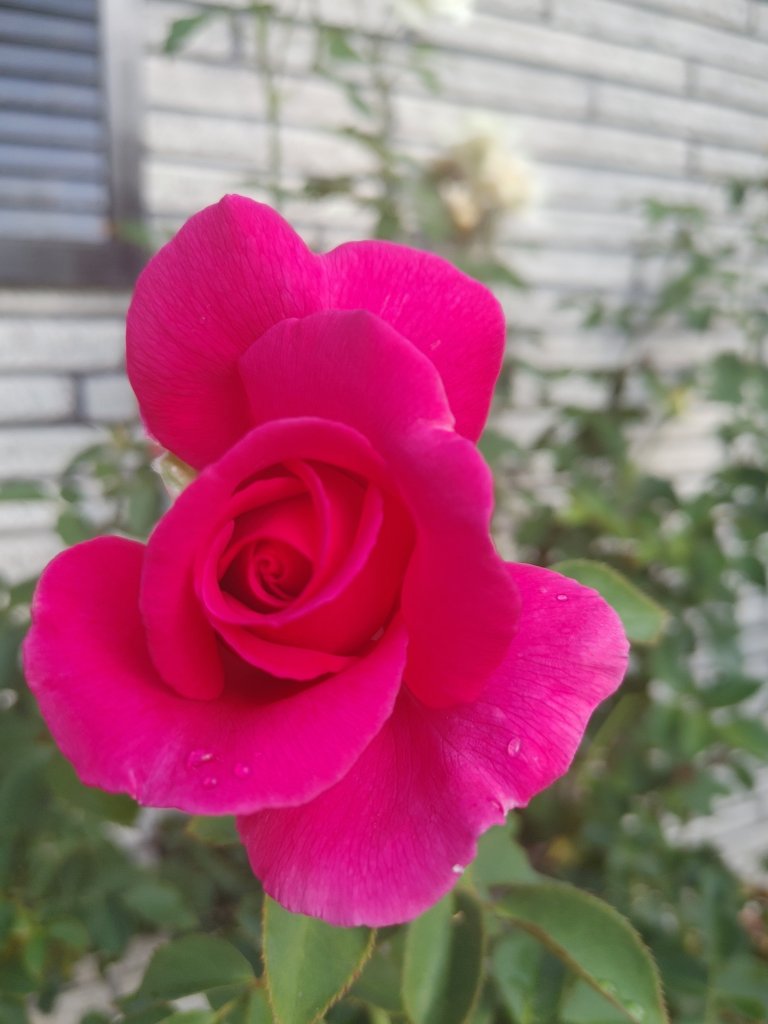
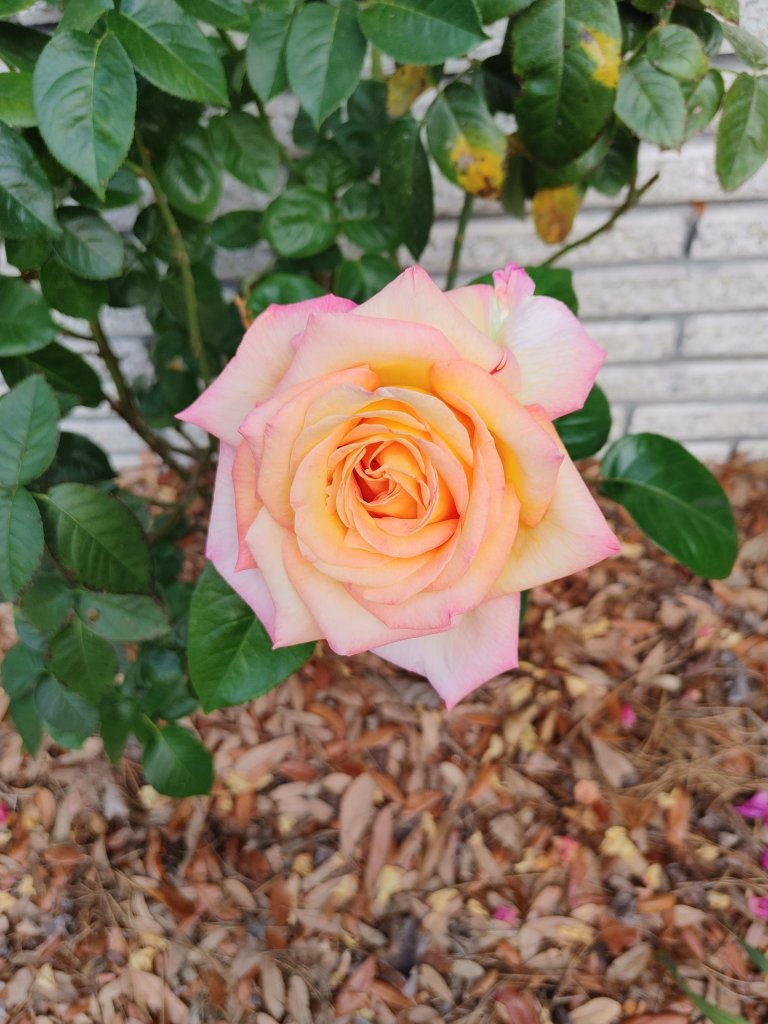
I have a rose bed by my house. I enjoy watching the roses grow, bud and bloom. This spring, they have been especially prolific. I have a variety of colors and each one of these bushes have had a variety of blooms. Some are small, others large. Some are growing singularly, others are growing in clusters. Each of them have a basic pattern of growth. They begin as buds, the sepal peels back slowly and then the petals unfold to reveal the inner stigma and stamen.
When they bud I never know how big or complex the blooms will be. They remind me of how people grow and their lives unfold differently. Even if a rose is attacked by a bug or worm and the bud is somehow damaged, they still bloom albeit with some holes or flaws. And so it is with us, yet we let these things deter us from seeking what our life in full bloom really should be like.
In 1 Corinthians 13, Paul is describing the key to operating in our spiritual gifts is having the love of Christ operating in us. No matter what we may do, eventually it will fade away but there will be a time when we will meet our Maker face to face. When we stand before Him, will we be able to say we lived to the fullest of our potential, destiny and purpose? And even if we do, we need to understand that we will never fully know what that means until we meet Him at the judgment seat. At that point, everything, every mystery, every experience will be revealed to show us how our lives unfolded and for what purpose.
In the meantime, it is our duty to not covet one person’s blossoming for our own or bemoan another’s purpose for our own. Instead, it is better to appreciate the fullness of our own blooming life and appreciate the unique blooming of others as all are together in God’s garden and each has a unique place, time and season to bloom.






 Random Thoughts of an Ordinary Woman